
How Values-Based Leadership Is Shaping Global Healthcare and Gender Advocacy Systems
Inside the growing convergence of ethical leadership, global networks, and women-led governance platforms
By Raymond Awiagah
There is a shift happening in global leadership, one that is increasingly present in how influence is being built and recognised.
Leadership is no longer being defined only by position, hierarchy, or visibility.
It is being shaped by something less tangible, but more enduring (values).
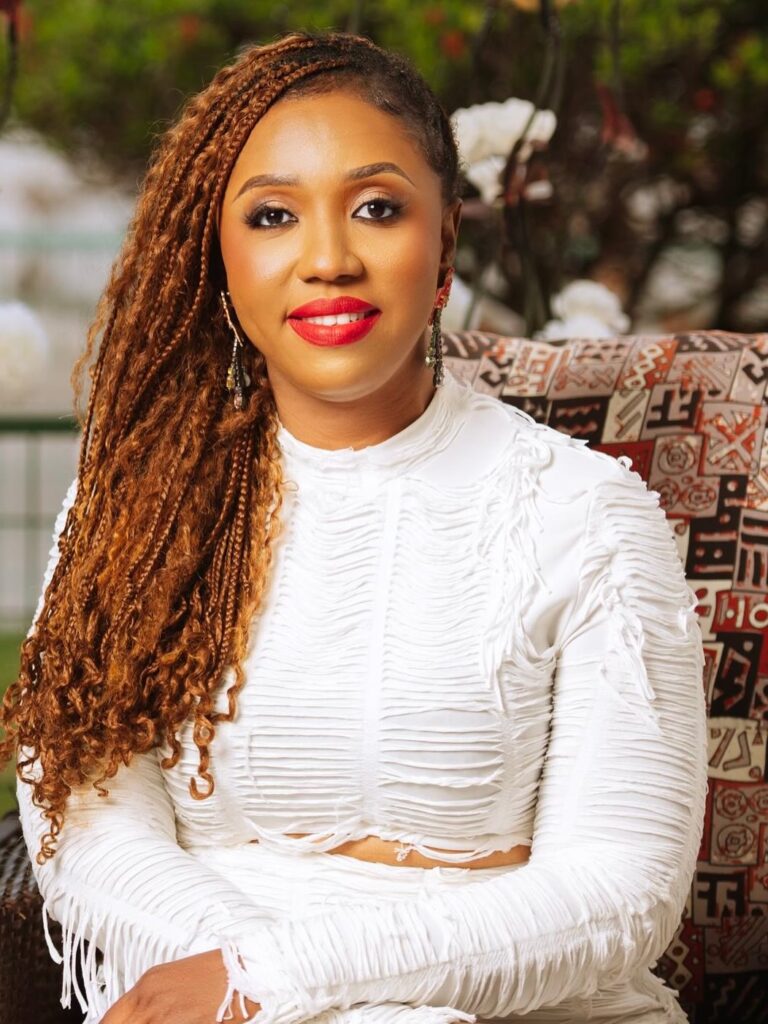
And in that shift lies the context for the appointment of Dr Emma Oliveira as Ghana Country Chair for the Healthcare, Wellness, Insurance & Risk Wing of the global G100 platform.
The announcement was made by the G100 Secretariat under Global Chair Farzanah Chowdhury, positioning her within a global network of women leaders working across healthcare, governance, entrepreneurship, and policy systems.
But the deeper story is not the appointment itself.
It is the type of leadership it reflects.
A Leadership Profile Built on Service, Not Visibility
Dr Emma Oliveira has built her leadership presence across healthcare, entrepreneurship, and community development in Ghana.

Her work does not sit in the highly visible category of public leadership.
It sits in the sustained category where influence is measured not by attention, but by consistency, trust, and long-term engagement.
As Charter President of the Pilot International Club of Accra, she has worked within structured service frameworks focused on community development and social impact.
But one of the most defining influences on her leadership philosophy comes from her involvement in the Rotary Club of Accra Legon East.
Rotary is built on a simple but powerful ethical filter known globally as the Four-Way Test:
- Is it the truth?
- Is it fair to all concerned?
- Will it build goodwill and better friendships?
- Will it be beneficial to all concerned?
In many leadership environments, these questions are rarely explicit.
But they are increasingly becoming implicit standards in how leadership credibility is judged.
Where Ethical Systems Meet Global Leadership Networks
The G100 platform operates differently.
It is a global leadership network connecting women across healthcare, policy, finance, entrepreneurship, and governance.
Structured through Global Chairs and Country Chairs across multiple nations, it is designed to expand leadership influence through collaboration and representation.
Its logic is scale.
Rotary’s logic is discipline.
One expands networks.
The other strengthens behaviour.
But what is emerging in global leadership today is not competition between systems.
It is convergence.
Influence is increasingly being shaped by how well leaders can operate across multiple systems of expectation, professional, ethical, and institutional.
Dr Oliveira’s appointment sits directly within that convergence point.
Healthcare Leadership Is Becoming a Networked System
Healthcare leadership is no longer confined to hospitals, ministries, or traditional policy structures.
It is increasingly shaped by:
- cross-border collaboration
- advocacy platforms
- leadership networks
- and gender-focused governance systems
This shift reflects a broader reality: healthcare is no longer just a sector.
It is a connected system of influence.
And within that system, leadership is defined less by institutional proximity and more by the ability to coordinate across networks that shape access, trust, and delivery.
The Real Shift: From Position to Alignment
One of the most important changes in modern leadership is subtle but significant.
For decades, leadership recognition followed a predictable pattern:
position → visibility → authority.
That model is no longer sufficient.
Today, influence is increasingly distributed across:
- values alignment
- network credibility
- institutional trust
- and sustained service engagement
This is why frameworks like Rotary’s Four-Way Test still matter in a modern context.
And why platforms like G100 are expanding their relevance.
They are not separate systems.
They are reinforcing ones.
Why This Appointment Matters Beyond the Title
It would be easy to interpret Dr Oliveira’s appointment as recognition.
But that interpretation is incomplete.
A more accurate reading is alignment, between personal leadership philosophy, institutional service frameworks, and global governance networks.
Because in today’s leadership environment, the key question is not only:
Who is appointed?
But also:
Who already reflects the values of the system before appointment happens?
That is where modern leadership selection is quietly evolving.
Conclusion: Leadership as a Values System, Not a Position
The global leadership landscape is changing in ways that are not always immediately visible.
Influence is no longer anchored only in hierarchy.

It is increasingly anchored in alignment. That is between what leaders believe, how they act, and the systems they operate within.
In that sense, the appointment of Dr Emma Oliveira is less about elevation and more about placement within a wider leadership architecture already shifting toward values-based governance.
Because the strongest leadership systems today are not simply built on authority.
They are built on shared values that travel across borders, sectors, and institutions.
And in that world, leadership is no longer just about being chosen.
It is about already belonging.