
Ghana’s Digital Governance Push: GIMPA, UESTC’s Vision for Africa’s Data Future
By Raymond Awiagah
A new digital governance hub in Accra signals Ghana’s shift toward data-driven leadership and continental influence
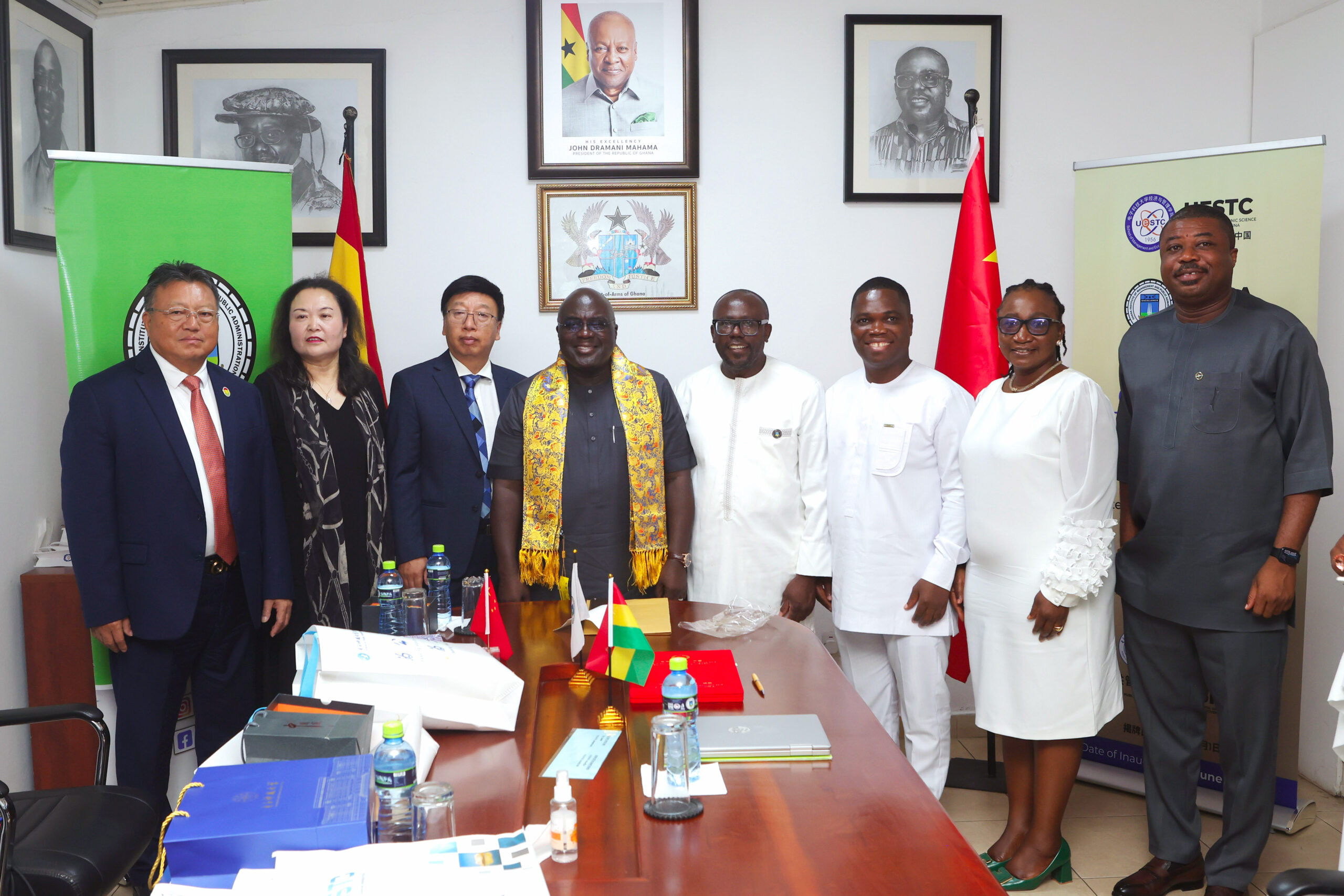
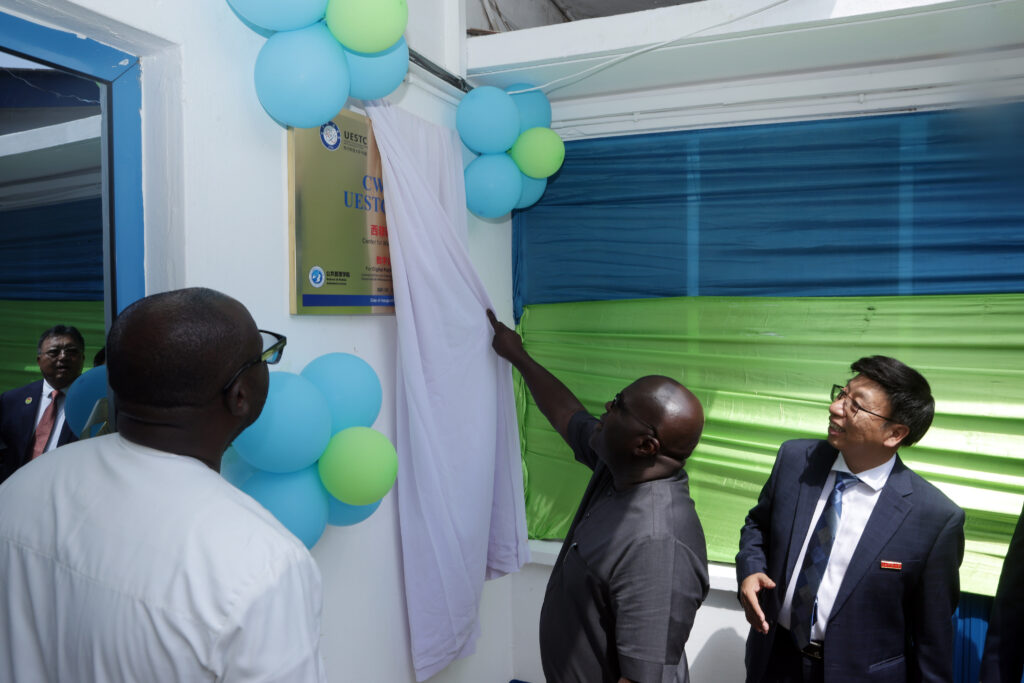
Ghana is taking a bold step toward reshaping how governance decisions are made across Africa, with the inauguration of a Digital Public Governance Centre office for Africa and the Center for West African Studies at the Ghana Institute of Management and Public Administration (GIMPA) in Accra.
The high-level engagement, attended by Chief of Staff Julius Debrah, GIMPA leadership, and a delegation from the University of Electronic Science and Technology of China (UESTC), signals a deepening push toward data-driven governance, research collaboration, and digital transformation across West Africa.
The event also forms part of GIMPA’s 65th anniversary celebrations, held under the theme “A Legacy of Excellence: A Future of Digital Transformation.”
GIMPA traces 65-year journey from civil service training to continental influence
Opening the institutional reflection, the Rector of GIMPA, Professor Samuel Bonsu, traced the university’s origins to 1961 when the Government of Ghana and the United Nations established what was then the Institute of Public Administration.
According to him, the purpose was clear at the time: to train a new generation of civil servants to take over from colonial administrators and build Ghana’s public service capacity.
Over the decades, GIMPA has evolved far beyond that original mandate.
Today, the institution hosts schools of Business, Law, Technology, and Social Sciences in addition to its core governance and leadership programmes.
“We have grown. We no longer just restrict ourselves to training people for the public service,” he noted, adding that GIMPA’s next phase will be defined by its expanding academic footprint and its contribution to national development.
He expressed gratitude to partners and stakeholders who have supported the institution over its 65-year journey, describing the anniversary as both a moment of reflection and a launchpad for the future.
From partnership to platform: GIMPA and UESTC deepen collaboration
Professor Bonsu also highlighted the long-standing partnership between GIMPA and the University of Electronic Science and Technology of China, which spans nearly a decade.
The collaboration has produced joint research programmes, academic exchanges, and the International Symposium on West African Studies (ISWAS), which has become a key platform for regional academic dialogue.
He explained that the partnership has now entered a new phase with the launch of a digital governance hub designed to collect and analyse data across Africa to support evidence-based decision-making.
The initiative, he said, is aimed at addressing one of the continent’s most persistent governance challenges: the lack of reliable, structured data to inform policy decisions.
“We want to mobilize data effectively for governments and individuals to support better decision-making and improve development outcomes,” he said.
He further emphasized that while the project begins in Ghana, its long-term ambition is continental coverage, supported by both human expertise and technological infrastructure.
China-Ghana academic partnership expands into digital governance architecture
Speaking on behalf of the Chinese academic community, Professor Zhao Shurong, Director of the Center for West African Studies (CWAS) at UESTC, outlined the evolution of the partnership since its establishment in 2017.
She noted that CWAS was created in collaboration with GIMPA, the University of Cape Coast (UCC), and five other Ghanaian universities, with a focus on promoting social and economic development in West Africa.
According to her, the initiative has grown into one of China’s leading regional research platforms on African studies, having been recognized by China’s Ministry of Education as a key regional research centre.
Professor Zhao revealed that CWAS has now conducted seven international symposiums on West African studies, three of which were hosted in Ghana at GIMPA.
She further disclosed that the partnership has now evolved into a physical digital governance structure following high-level academic engagements between Ghana and China.
At the centre of this new phase is the development of a China–Ghana Digital Public Governance Hub, combining UESTC’s strength in digital technology with GIMPA’s expertise in governance and public administration.
“This is the first stage. We have unveiled the centre, and the Chief of Staff has inaugurated the Ghana Digital Public Governance Hub here,” she said, adding that the long-term ambition is to position it as a leading research centre in Africa.
Julius Debrah: Africa must become a producer of knowledge
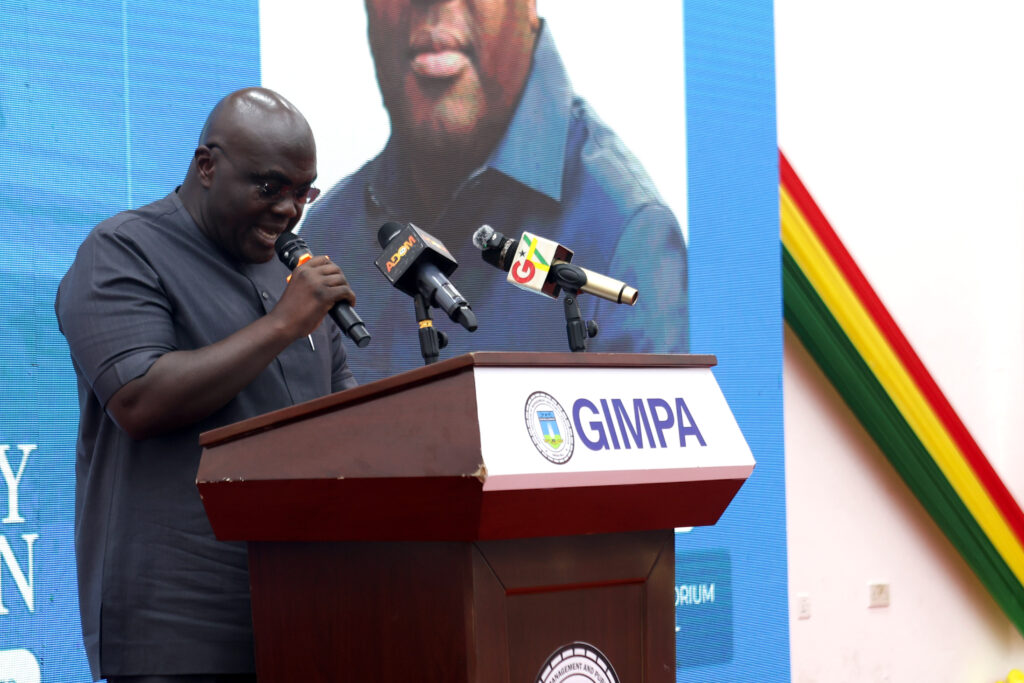
Delivering one of the most defining messages of the event, Chief of Staff Julius Debrah used the occasion to frame Ghana’s broader digital transformation agenda.
He stated that West Africa must move beyond being a subject of global research and instead become a producer of knowledge capable of shaping its own development path.
“We cannot afford to be permanent subjects in someone else’s academic literature. We must be the authors of our own analysis,” he stressed.
He emphasized that the region’s governance, economic and technological challenges require data-driven solutions rooted in local realities but informed by global expertise.
Data as the new foundation of governance
A major focus of the Chief of Staff’s remarks was the role of data in modern governance.
He noted that many governments across Africa continue to make policy decisions without adequate data, resulting in inefficiencies and weak development outcomes.
The new digital governance hub, he explained, is designed to change that reality by serving as a central platform for collecting and analysing governance data across the continent.
He stressed that the goal is not only to support governments but also to provide useful data for individuals, researchers, and institutions involved in development planning.
Digital transformation as a national priority
Julius Debrah also underscored the urgency of digital transformation, pointing to artificial intelligence, cloud computing, digital finance, and e-governance as key drivers reshaping global systems.
He warned that West Africa risks falling behind if it fails to actively participate in this transformation.
According to him, Ghana’s education and governance systems are being aligned with a broader national digital agenda aimed at building a competitive and knowledge-driven economy.
He further called for stronger collaboration between government, academia, and international partners to ensure the success of the initiative.
A shared vision for Africa’s digital future
The inauguration of the Digital Public Governance Centre and the Center for West African Studies represents more than an academic milestone.
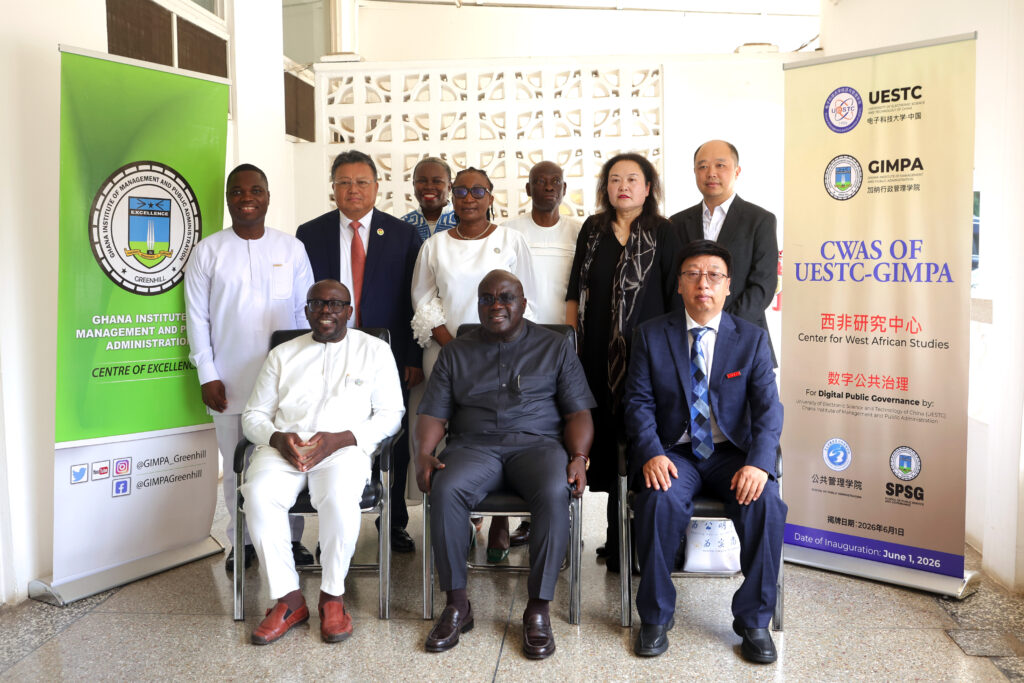
It reflects a broader shift toward building institutional capacity for data-driven governance, strengthening Ghana-China academic cooperation, and positioning Ghana as a regional hub for policy research and digital innovation.
As West Africa grapples with complex development challenges, the message from Accra was clear: the future will not only be shaped by infrastructure or policy, but by who controls and produces knowledge.
And through partnerships like GIMPA and UESTC, Ghana is making a strategic bid to be at the centre of that transformation.