

Devtraco Plus: The Hidden System Building Ghana’s Cities
By Raymond Awiagah
Devtraco Plus: From Mining to Modern Homes
At the recently concluded 19th edition of the West African Mining and Power Expo (WAMPEX) in Accra, the attention was on machinery, aggregates, and industrial technology.
But beneath the exhibition floor, was a different story. That is one that explains how modern cities in Ghana are actually built.
It is not a single industry driving this process.
It is a system.
A connected chain that runs from mining, through finance and construction, into real estate development.
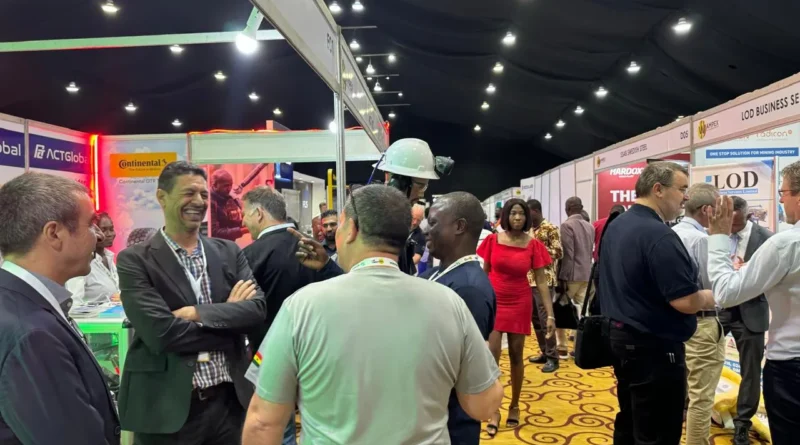
Among the exhibitors was Devtraco Plus, a Ghanaian based luxury real estate company alongside financial institutions and industrial players with each sitting at different points of the same value chain.
Cities Are Not Built at Once. They Are Assembled in Layers.
Urban development does not begin with buildings.
It begins much earlier, in layers that most people never see.
Before a home is delivered or a gated community takes shape, a sequence of systems must align:
- raw materials must be extracted
- aggregates must be processed
- capital must be secured
- construction must be executed
- and finally, real estate must be delivered
Each layer depends on the one before it.
When one breaks, the entire chain slows down.
The Starting Point: Mining and Raw Materials
Every modern building in Ghana begins with materials sourced from mining and aggregates operations.
At WAMPEX, companies demonstrated how raw stone is crushed, screened, and processed into construction materials such as sand, gravel, and aggregates.
These materials form the physical foundation of:
- roads
- buildings
- bridges
- housing developments
Without this stage, nothing else in the construction ecosystem moves.
The Financial Layer That Determines Everything
Behind every major construction and real estate project is a financial structure that makes it possible.
Banks including Absa Bank Ghana, Access Bank Ghana, Zenith Bank Ghana, and Stanbic Bank Ghana were all present at the exhibition.
Their role extends far beyond traditional banking.
They provide:
- project financing
- equipment and asset funding
- trade finance for imports
- SME support across the supply chain
- mortgage structures for end users
Without this layer, industrial expansion remains theoretical.
Construction: Where Industry Becomes Structure
Construction firms act as the bridge between industrial production and urban development.
They convert raw materials into physical infrastructure:
- residential buildings
- roads and drainage systems
- commercial developments
- utilities and urban layouts
This stage determines how efficiently cities expand and function.
Real Estate: The Final Stage of the Value Chain
At the end of this system sits real estate development.
Devtraco Plus represents this final transformation, where industrial inputs become livable environments.

Modern developments are no longer just housing units.
They are structured communities built around:
- urban planning
- lifestyle design
- security systems
- investment value
- long-term livability
This reflects a shift in Ghana’s housing sector from basic shelter to organized urban living.
The Hidden System Behind Every City
What WAMPEX revealed is not a collection of industries but trather a single interconnected system:
Mining → Finance → Construction → Real Estate
Each sector plays a defined role:
- mining supplies materials
- banks provide capital
- construction builds the infrastructure
- real estate delivers the final product
Together, they form the hidden architecture of urban development.
Why This Matters for Ghana’s Future
Ghana’s cities are expanding rapidly, driven by population growth, investment flows, and infrastructure demand.
But this growth is no longer random.
It is increasingly structured, financed, and coordinated through interconnected systems.
Companies like Devtraco Plus sit at the final stage of this transformation, turning industrial output into modern urban communities.
Conclusion
WAMPEX did not just showcase mining and construction technology.
It revealed the full system behind how cities are built in Ghana.
From mining operations to financial institutions, from construction companies to real estate developers, each player is part of a larger structure shaping the country’s urban future.

And in that system, real estate is not the starting point.
It is the outcome.